
Sales Prospecting: Finding & Engaging Customers
 Rishabh Jain
TL;DR
Sales prospecting is the process of identifying, connecting with, and qualifying potential customers to create a steady, predictable revenue pipeline.
In 2026, the most successful sales teams use data-driven targeting, AI-powered personalization, and strategic follow-ups to move prospects from cold outreach to closed deals.
It’s no longer about chasing leads, it’s about building meaningful, repeatable conversations that convert.
What Is Prospecting in Sales?
Sales Prospecting Definition
Sales prospecting is the process of identifying, connecting with, and qualifying potential customers who fit your Ideal Customer Profile (ICP). It’s the first stage of the sales cycle, sitting between lead generation (creating interest) and closing (turning interest into revenue).
In simple terms, prospecting in sales means finding the right people, not just more people. The goal is to engage high-potential leads early, understand their pain points, and determine whether they’re a genuine fit for your solution before investing in the full sales process.
This step ensures sales teams focus on prospects most likely to convert, saving time and maximizing ROI.
Why Prospecting Matters
Prospecting isn’t a task — it’s the foundation of every predictable revenue engine. Here’s why it’s crucial for modern B2B teams:
Fuels the pipeline: Without prospecting, no consistent flow of opportunities enters the funnel.
Drives predictable growth: Regular outreach and qualification create measurable sales momentum.
Focuses on high-intent buyers: Helps reps spend time on prospects that actually fit the ICP.
Strengthens marketing-sales alignment: Data from prospecting sharpens targeting and messaging.
Builds trust before the pitch: Early engagement lets reps position themselves as advisors, not sellers.
Prospecting isn’t about convincing — it’s about qualifying.
The Prospecting Process (6 Stages)
A successful sales prospecting process is more than just sending cold emails — it’s a structured, data-driven system that helps you find, engage, and convert the right prospects consistently.
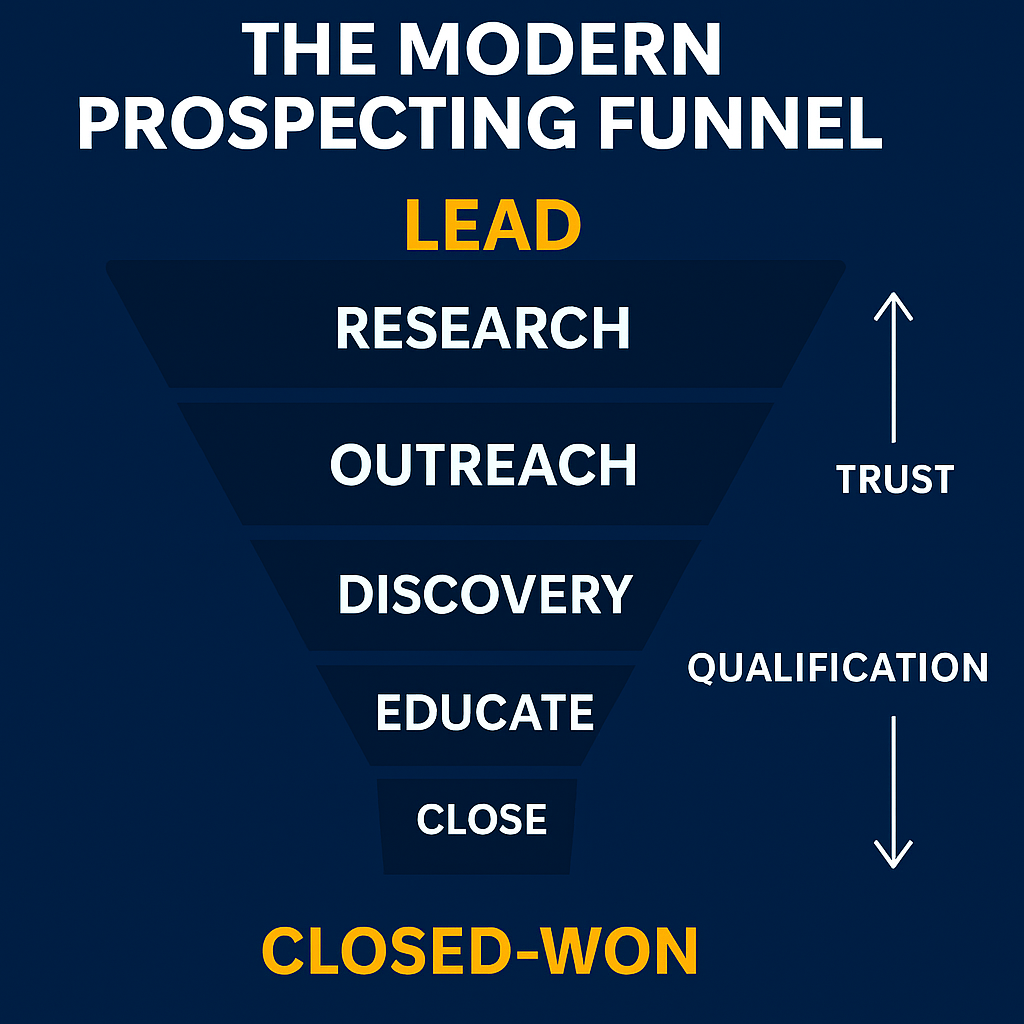
Here’s how top-performing B2B teams build their prospecting workflow from start to finish:
1. Research
The foundation of effective prospecting starts with understanding who to target. Define your Ideal Customer Profile (ICP) by analyzing firmographics, pain points, and intent signals.
Use modern data tools like LinkedIn Sales Navigator, ZoomInfo, and Crunchbase to uncover company insights, trigger events (like funding rounds), and decision-makers.
Goal: Identify prospects that fit your ICP before investing in outreach.
2. Outreach
Once you’ve built a focused list, it’s time to make contact. Use personalized cold emails, LinkedIn messages, or calls that focus on your prospect’s challenges — not your product’s features.
Pro Tip: Lead with relevance. Reference their company, role, or recent event.
💬 Example:
Hey [Name], noticed your team is expanding into [region]. Curious how you’re currently managing [pain point]?
Goal: Capture attention through empathy and relevance.
3. Discovery
This stage separates good leads from great ones. Ask open-ended questions to learn about your prospect’s challenges, goals, and decision-making process.
Example:
What’s the biggest bottleneck in your workflow right now?
The discovery phase builds trust — it’s where your prospect starts seeing you as a problem-solver, not a salesperson.
4. Educate & Evaluate
Now that you understand their needs, demonstrate how your solution aligns with their goals. Use case studies, demos, or ROI examples to illustrate tangible outcomes.
Anticipate objections and handle them with empathy — not pressure.
Example: “Many teams we speak with felt the same concern before realizing how automation actually freed up 30% of their team’s time.”
Goal: Turn awareness into belief through proof and empathy.
5. Close
When the fit is clear and interest is validated, move the prospect toward the purchase stage.
This is where clean handoffs, pricing clarity, and speed matter most. Ensure your proposal reflects their specific goals, not a generic offer.
Goal: Convert trust into commitment.
6. Evaluate
Prospecting never truly ends — it evolves. Review your outreach data, analyze conversion rates, and gather prospect feedback to improve future efforts.
Track metrics like response rate, meeting-to-opportunity ratio, and deal velocity to refine your playbook.
Goal: Continuous optimization through insights and iteration.
Types of Sales Prospecting
Sales prospecting generally falls into two major categories — inbound and outbound. The best sales teams use both strategically, balancing attraction with outreach to maintain a full, healthy pipeline.
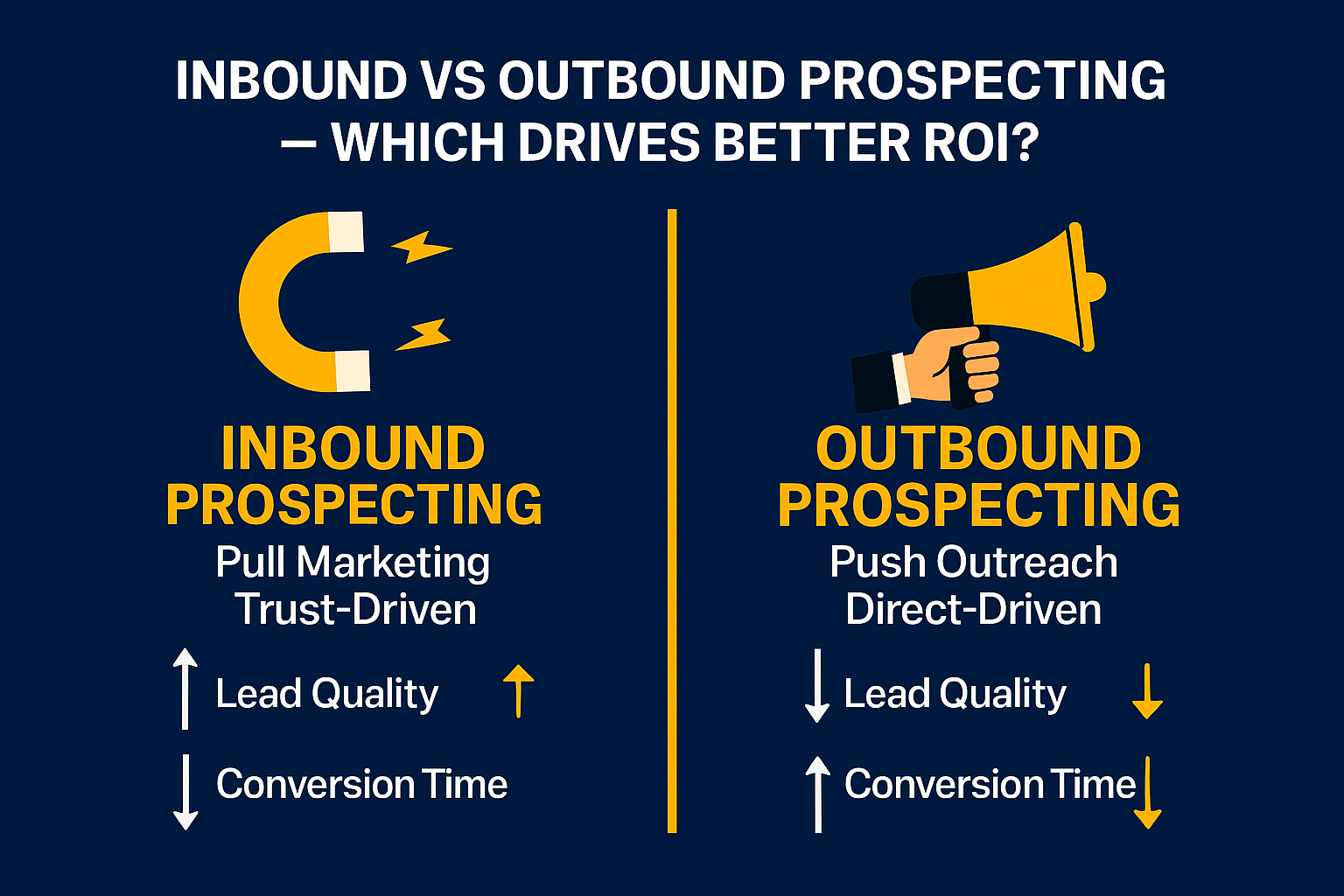
Inbound Prospecting
Inbound prospecting focuses on attracting potential buyers through valuable content and genuine education. Instead of chasing leads, inbound strategies draw prospects in by solving problems they’re already researching.
How It Works:
You create content that speaks to your audience’s pain points — blogs, SEO articles, webinars, YouTube videos, email newsletters, and online communities. As prospects consume your content, they build trust with your brand and often reach out on their own.
Best Channels:
SEO-driven blogs and resource libraries
YouTube tutorials and webinars
LinkedIn and niche community discussions
Automated email nurturing sequences
Inbound Prospecting Keywords: marketing prospecting, inbound prospecting examples
Pro Tip: Inbound leads are typically warmer, as they’ve already engaged with your content or brand before connecting with sales.
Outbound Prospecting
Outbound prospecting, on the other hand, is proactive — you reach out directly to potential customers through targeted communication. It’s all about identifying prospects that fit your Ideal Customer Profile (ICP) and starting the conversation first.
Common Tactics:
Cold calls and personalized cold emails
LinkedIn outreach and connection requests
Direct messages (DMs) or sales cadences
Industry event networking
Best For:
Enterprise or high-ticket B2B deals
New product launches or untapped markets
When brand awareness is still growing
Pro Tip: Modern outbound prospecting isn’t about volume — it’s about relevance, timing, and personalization.
Lead vs. Prospect vs. Opportunity
Understanding the difference between a lead, a prospect, and an opportunity is key to building a predictable and efficient sales funnel.
Each stage represents a deeper level of engagement and qualification — from awareness to conversion.
Stage | Description | Example |
|---|---|---|
Lead | An unqualified contact who has shown initial interest, but hasn’t been evaluated yet. | Downloaded an ebook or subscribed to a newsletter. |
Prospect | A qualified lead that fits your Ideal Customer Profile (ICP) — shows intent and aligns with your offering. | Booked a demo or responded positively to outreach. |
Opportunity | A sales-ready prospect showing strong buying intent — typically in the negotiation or decision phase. | Discussing pricing or final contract details. |
Prospecting Strategies & Techniques
Modern sales prospecting is no longer about volume — it’s about relevance, timing, and persistence. Below are the most effective strategies top-performing sales teams use to turn cold contacts into warm opportunities.
1. Personalization at Scale
Personalized outreach is no longer optional — it’s the foundation of effective prospecting.
Use AI insights, CRM triggers, or LinkedIn alerts to tailor every message to a prospect’s context, role, or company event.
Example:
“Congrats on your Series A — curious how you’re scaling your outbound motion?”
Personalization shows authenticity and boosts reply rates by up to 63%.
2. Multi-Channel Outreach
Don’t rely on a single platform — successful reps use a multi-channel approach that integrates email, LinkedIn, phone calls, and social DMs.
Tip: Use consistent messaging across channels but vary tone and timing. The key is orchestrated persistence, not repetition.
3. Content-Driven Prospecting
Educate before you sell. Share case studies, webinars, and customer success stories that naturally attract high-quality prospects.
When prospects see you as a trusted educator, not a seller, conversions happen faster.
Example: Hosting a short “Lunch & Learn” webinar for your ICP segment can generate 5–10x higher engagement than cold calls alone.
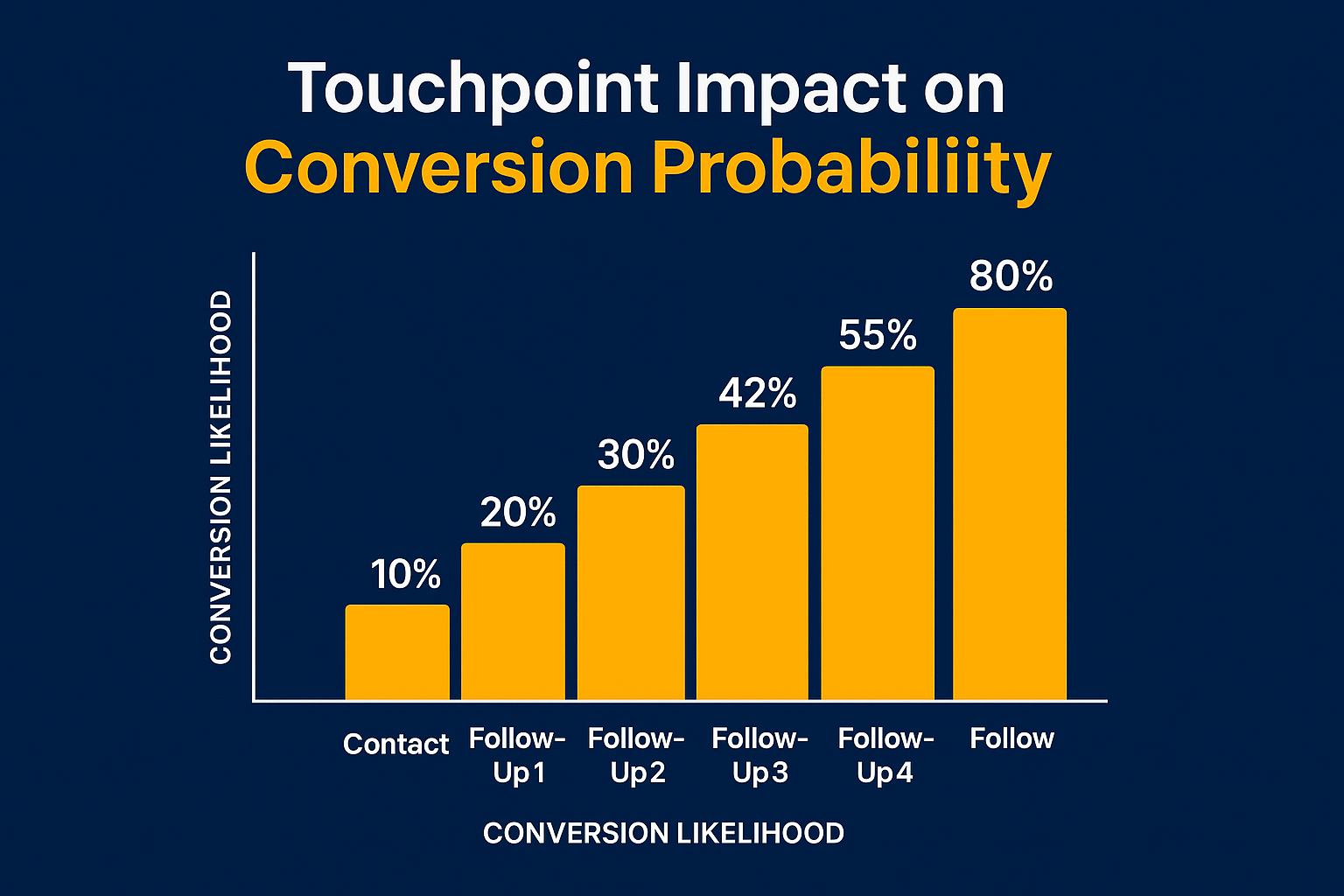
4. Timing & Follow-Ups
Timing matters more than tone. Research shows that 80% of deals require 5+ follow-ups, yet most reps stop after two attempts.
Use CRM or automation tools to schedule reminders and track touchpoints until contact is made or interest is confirmed.
Pro Tip: Create a “nurture lane” for slower prospects with educational drips instead of hard pitches.
Essential Sales Prospecting Skills
Great prospectors aren’t just persuasive — they’re strategic listeners, researchers, and relationship builders. The following skills separate average reps from top performers:
1. Active Listening
The best sales conversations start with curiosity, not a pitch.
Active listening helps uncover hidden pain points and tailor your message to what actually matters to the buyer.
Pro Tip: Listen for emotional cues like hesitation or repetition — they often signal true objections or opportunities.
2. Product & Industry Knowledge
Prospects trust experts. Knowing your product deeply — and understanding your industry landscape — allows you to connect your solution to real-world outcomes.
Example: A SaaS rep who can articulate ROI in terms of workflow savings earns credibility instantly.
3. Empathy and Persistence
Empathy builds connection; persistence builds pipeline.
Balancing the two helps you follow up effectively without sounding pushy.
Stat: 60% of customers say “no” four times before saying “yes.” Keep following up — respectfully.
4. Time Management
Top-performing prospectors manage their time like portfolio managers — prioritizing high-intent leads and batching repetitive tasks.
Use calendar blocking for research, outreach, and follow-ups to stay consistent and avoid burnout.
5. Data-Driven Decision Making
Modern prospecting runs on insights. Analyze metrics like response rates, call connect ratios, and conversion velocity to refine your outreach strategy.
Tip: Pair CRM data with buyer intent signals for smarter, faster targeting.
Sales Prospecting Tools (2026 Stack)
The modern sales prospecting tech stack blends data, automation, and analytics to help reps scale outreach without losing personalization.
Here’s a quick breakdown of the top tool categories shaping B2B prospecting in 2026:
Category | Tools | Purpose |
|---|---|---|
CRM | HubSpot, Salesforce | Centralize pipeline management, track deals, and automate lead scoring. |
Data | ZoomInfo, Lusha, Apollo | Discover verified contact data, firmographics, and buying intent. |
Automation | SalesEcho, Outreach.io | Execute AI-driven follow-ups, automate email sequences, and optimize timing. |
Analytics | Factors.ai, Dreamdata | Measure campaign effectiveness with multi-touch attribution and revenue insights. |
Related
Best AI Sales Intelligence Tools
Prospecting Examples
Knowing the right prospecting techniques is one thing — but seeing how they look in action makes all the difference.
Here are three proven examples that top-performing sales reps use to start real conversations and build trust early:
1. Cold Email Example
Cold emails still work — when they’re short, specific, and relevant. Focus on pain points, outcomes, and credibility rather than pitching too soon.
Example:
“Hey [Name], noticed your team is scaling [specific process]. We helped [similar company] cut [problem] by 40%. Worth a quick 10-min chat?”
Why it works: Personalized, outcome-focused, and easy to reply to.
2. Social Selling Example
Social selling builds awareness before you ever reach the inbox. Engage genuinely with your prospect’s content — like, comment, and share relevant posts — to create familiarity.
Example: Commenting on a prospect’s post with an insight or question, then following up in DMs:
“Loved your point about outbound quality over quantity — we’ve seen the same pattern with clients in [industry]. Curious how you’re approaching it?”
Why it works: Builds warm rapport and credibility before making the ask.
3. Referral Example
Referrals remain the highest-converting prospecting channel — they carry instant trust. Tap into happy customers, partners, or networks to get introduced to similar ICPs.
Example:
“Hi [Name], [Mutual Connection] suggested I reach out — they thought our recent results with [Company] might be relevant to your goals.”
Why it works: Establishes immediate trust through social proof and shared connections.
Common Prospecting Challenges & Fixes
Even the best sales teams hit roadblocks when prospecting — from low engagement to poor lead fit.
The key is to identify where the friction lies and optimize your process before it compounds.
Here are the most common prospecting challenges and how to fix them:
Challenge | Fix |
|---|---|
Low Response Rate | A/B test subject lines and personalize outreach based on context, not templates. Add relevance through recent company news or shared connections. |
Poor Lead Quality | Revisit your Ideal Customer Profile (ICP) — focus on firmographics, intent signals, and industry alignment. Quality > quantity. |
Lack of Follow-Up | Automate cadence sequences and reminders using CRM or automation tools like SalesEcho or Outreach.io. |
Marketing-Sales Misalignment | Define shared KPIs (pipeline value, MQL → SQL rate) and hold regular syncs between marketing and sales. |
Prospect Fatigue | Offer value upfront — share an insight, benchmark, or helpful resource before asking for time. Lead with curiosity, not pressure. |
Strategic Prospecting Framework (SPF)
Top-performing sales teams follow a repeatable system for identifying, engaging, and converting ideal customers — not just ad-hoc outreach. The Strategic Prospecting Framework (SPF) provides a structured approach that blends strategy, personalization, and data.
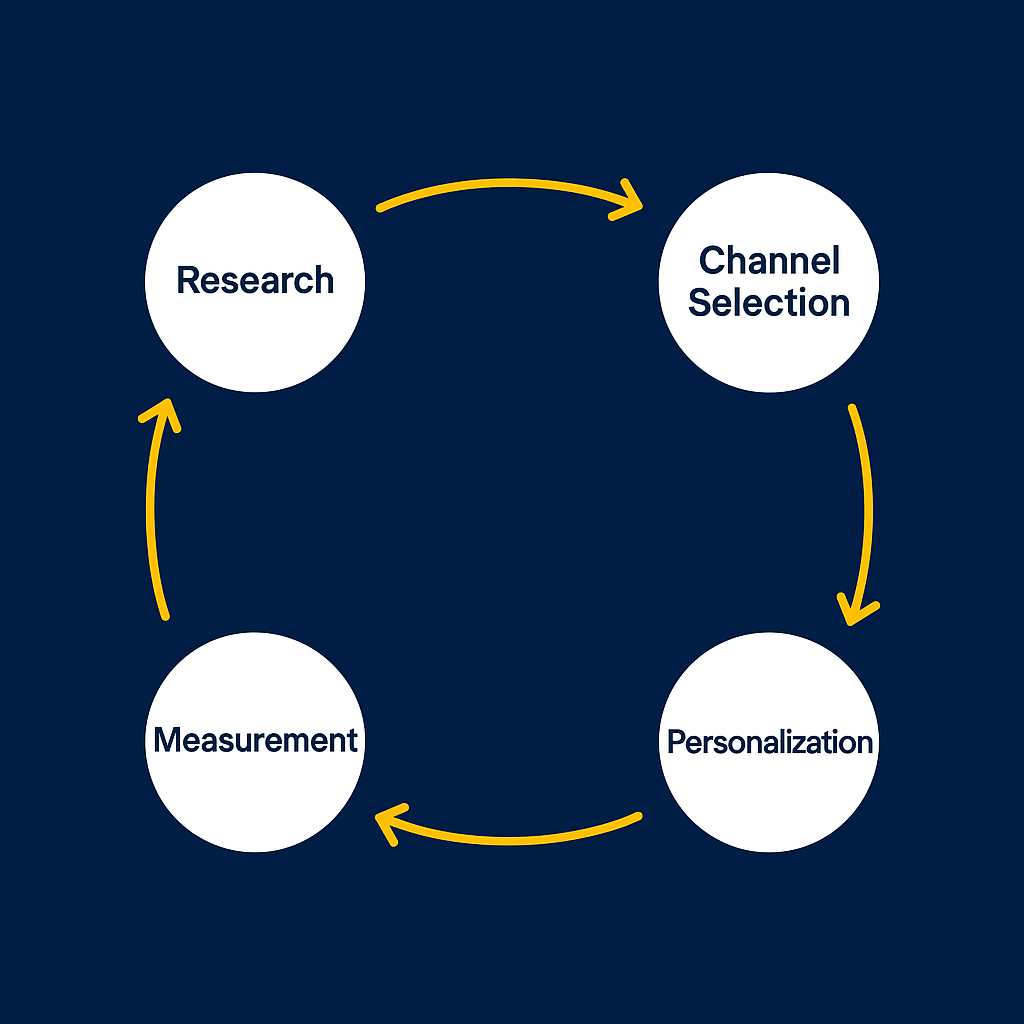
Here’s how it works:
1. Define ICP & Personas
Start by defining your Ideal Customer Profile (ICP) — industry, company size, budget, tech stack, and decision-maker roles.
Pair this with detailed buyer personas that capture motivations, pain points, and objections.
Goal: Focus only on the accounts and individuals most likely to convert.
2. Identify Channels
Different audiences live on different platforms. Identify where your prospects spend time — LinkedIn, email, Slack communities, or events — and focus your energy there.
Tip: Match channel to context: use email for outreach, LinkedIn for awareness, and communities for engagement.
3. Personalize Communication
Generic outreach dies in the inbox. Use dynamic personalization — industry context, shared experiences, or role-specific triggers — to make your message stand out.
Example:
“Hey [Name], saw your team just expanded to [region]. Curious how you’re handling [pain point] as you scale?”
Goal: Relevance over volume.
4. Nurture Relationships
Move beyond transactions. Build trust through consistent follow-ups, helpful content, and value-driven conversations.
Even “not now” prospects can become “yes” opportunities later if nurtured properly.
5. Measure & Iterate
Track what works — and what doesn’t. Review response rates, pipeline velocity, and close ratios to refine your process.
Successful teams treat prospecting like a living system — continuously learning, testing, and improving.
Pro Tip: Feed insights back into your CRM to refine ICP accuracy over time.
Future of Prospecting (2026–2030)
The next five years will redefine how sales teams discover, engage, and convert prospects. Technology, behavior, and trust are merging — transforming prospecting from cold outreach into contextual, conversational engagement.
Here’s what’s shaping the future:
1. Predictive AI for Buying Intent
Advanced algorithms will forecast who’s most likely to buy — before they even engage.
AI will analyze CRM signals, search intent, and digital body language to prioritize leads with the highest conversion potential.
Example: Predictive models flagging accounts with increased website visits or hiring activity.
2. Voice & Video Prospecting
Prospect engagement will shift toward short, personalized video messages and AI-transcribed voice notes. Invideo Agent can also help sales teams turn existing images into videos for personalized outreach and follow-up content.
It’s authentic, fast, and human — cutting through inbox noise.
Pro Tip: Tools like Loom, Vidyard, and SalesEcho’s conversational AI features make this scalable.
3. Real-Time CRM Enrichment
Static data is dead. Modern CRMs will auto-refresh with live signals — funding rounds, leadership changes, or buying triggers — ensuring reps always have fresh context before outreach.
4. Conversational Outreach (ChatGPT-like Assistants)
AI co-pilots will assist reps in drafting, personalizing, and optimizing messages — all in real time.
Expect natural, chat-like prospecting that feels less robotic and more relevant.
5. Trust-Based Selling Through Communities
The future of prospecting isn’t “cold” — it’s credibility-driven.
Deals will originate from peer groups, Slack communities, and private networks where recommendations carry more weight than outreach.
FAQ
1. What is sales prospecting?
Sales prospecting is the process of identifying, engaging, and qualifying potential customers (prospects) who fit your Ideal Customer Profile (ICP). It’s the first stage of the sales cycle and fuels your entire pipeline.
2. Why is prospecting important in sales?
Because it’s the foundation of predictable growth. Without consistent prospecting, your pipeline dries up — impacting revenue, forecasting, and momentum.
3. What’s the difference between a lead, prospect, and opportunity?
A lead shows initial interest, a prospect is qualified and fits your ICP, and an opportunity is actively considering purchase.
4. What are the best prospecting methods?
A balanced mix of inbound (content, SEO, social) and outbound (email, calls, LinkedIn) works best — supported by automation tools like SalesEcho, HubSpot, or Outreach.io.
5. How can I improve my prospecting success rate?
Focus on personalization, follow-up consistency, and data accuracy. Review analytics regularly to refine your ICP and messaging.
6. What is strategic prospecting?
It’s a framework that aligns research, personalization, and measurement — turning prospecting into a repeatable growth system, not guesswork.
7. What’s the future of prospecting?
AI-driven personalization, conversational selling, and trust-led engagement through communities will define the next era of prospecting.
Conclusion
The best sales teams don’t just send more messages — they build smarter systems that connect with the right people, at the right time, with the right story.
Sales prospecting in 2026 isn’t a numbers game anymore.
It’s about data precision, genuine communication, and continuous refinement.
When done right, prospecting transforms from cold outreach into warm opportunities and predictable revenue — the true engine of every successful sales organization.