
How to Overcome Budget Objections in Sales Calls (With Examples & Proven Rebuttals)
 Rishabh Jain
TL;DR: Budget objections aren’t really about money — they’re about perceived value. The key is to acknowledge the concern, highlight ROI, break down costs into manageable terms, and back it up with proof (case studies, data, examples). When you reframe the conversation around outcomes instead of price, you turn “too expensive” into “worth every penny.”
Budget pushback is the #1 sales objection across industries. Whether you’re closing SaaS deals, selling cars, or pitching services, hearing “It’s too expensive” or “We don’t have the budget right now” is almost inevitable. The good news? A budget objection doesn’t always mean the deal is dead—it’s often just a sign that the buyer hasn’t fully seen the value yet.
So, what is a sales objection?
A sales objection is any reason—spoken or unspoken—that a potential customer gives to avoid moving forward with a purchase. Objections can take many forms: lack of need, bad timing, lack of trust, or, most commonly, concerns about cost and budget.
In this guide, you’ll learn exactly how to handle objections in sales calls. We’ll cover:
The most common budget objections and why they come up
Proven sales rebuttals and real-world examples
Objection handling techniques you can use right away to shift the conversation from price to value
“Overcoming sales objections isn’t about lowering price — it’s about raising perceived value.”
This framework will help you turn pricing pushback into opportunities to build trust, prove ROI, and close more deals with confidence.
What Are Sales Objections?
A sales objection is a concern or hesitation expressed by a potential customer that prevents them from saying “yes” to a purchase. In simple terms, it’s the reason a buyer gives for not moving forward in the sales process. Objections can be about money, timing, trust, or even whether they truly need the solution at all.
There are several types of sales objections that sales reps encounter most often:
Budget objections – “It’s too expensive” or “We don’t have budget for this right now.”
Timing objections – “Let’s revisit this next quarter” or “We’re not ready yet.”
Need objections – “We don’t see a real need for this” or “We already have a solution in place.”
Trust/authority objections – “I’ll need to check with my manager” or “I’m not sure your company can deliver.”
👉 These categories represent the majority of customer objections you’ll hear in sales calls. Understanding them is the first step toward building effective rebuttals and turning hesitation into commitment.
Why Budget Objections Are the Most Common Sales Objections
When it comes to customer objections, money is the easiest card for buyers to play. It’s simple, it feels objective, and it rarely requires much explanation. Saying “It’s too expensive” or “We don’t have the budget” is a polite, low-risk way for prospects to slow down or exit the sales process without confronting deeper concerns like trust, timing, or need.
That’s why budget pushback consistently ranks as one of the most common sales objections. According to industry studies, as many as 35–40% of stalled deals cite “budget” as the primary reason for not moving forward. But here’s the catch: in most cases, budget isn’t the real problem. It’s a proxy for something else—unclear ROI, lack of urgency, or low confidence in your solution.
“Price is rarely the real problem — value perception is.”
Framing budget as the biggest objection in sales is misleading if you take it at face value. A skilled rep understands that cost objections are often smoke screens. By probing deeper and demonstrating value, you can transform the conversation from “too expensive” to “worth the investment.”
The Top 5 Budget Objections You’ll Hear in Sales Calls
Budget concerns make up some of the most typical sales objections. They come in different flavors, but they all point back to the same theme: price vs. perceived value. Below are the five most common objections you hear in sales conversations.
“Your product is too expensive.”
This is the classic budget objection. When a prospect says this, what they’re really saying is: “I don’t see enough value to justify the cost.” Instead of dropping your price, shift the focus to ROI. Show them how the investment pays for itself in saved time, increased revenue, or reduced risk.
“We don’t have budget right now.”
Timing and budget often get bundled together. This objection usually signals competing priorities rather than an actual lack of funds. Probe deeper by asking: “If budget wasn’t an issue, would this be a priority?” If they say yes, you’ve uncovered a future opportunity and can discuss phased rollouts or next-quarter planning.
“I need to check with finance.”
This is both a budget and an authority objection. The buyer may not have decision power, or they want to deflect pressure. Your job is to equip them with the right data, ROI case studies, and talking points so they can confidently take your solution to their finance team — or better yet, get a direct line to that decision-maker.
“We’re cutting costs.”
Prospects often use cost-cutting as a blanket excuse to say no. Instead of accepting it, frame your product as part of the solution. For example: “I hear you’re trimming expenses. That’s exactly why teams like yours choose us — because we help them save money in [specific area].” Position yourself as a tool that makes cost-cutting possible.
“Can you do it cheaper?”
This objection is a test of confidence. If you drop your price too quickly, you signal weakness. Instead, reinforce your value: “Our price reflects the results we deliver. If budget is a challenge, we can explore different packages, but the ROI remains the same.” This approach keeps the conversation about outcomes, not discounts.
👉 Mastering these typical sales objections ensures you’re never caught off guard. When you anticipate them, you can respond with calm, confidence, and clear value framing.
Proven Sales Rebuttals to Budget Pushback
Budget pushback can feel like a deal-breaker, but the best reps know how to turn it into a chance to reinforce value. Below are five proven sales rebuttals you can use when handling sales objections and responses around cost.
Shift from Price → Value
When a prospect says “It’s too expensive,” avoid debating the number. Instead, redirect the conversation to outcomes:
Show how your product saves time, increases revenue, or reduces risk.
Example line: “I hear you on price. Most of our clients felt the same way until they saw how quickly the ROI covered the investment.”
This reframes the objection from expense to opportunity.
Compare Cost vs. ROI
A classic sales rebuttal is to contrast the upfront price with the return on investment.
Example: “Yes, it’s an $8,000 annual investment — but most teams recover that in just two closed deals. After that, everything is profit.”
This logic works especially well in B2B sales where lost deals or inefficiency cost far more than the product itself.
Use Social Proof & Case Studies
People trust results from others who look like them. When budget concerns arise, share quick stories or testimonials.
Example: “One of our customers had the same concern. Within three months, they cut support costs by 25% and covered their investment twice over.”
These kinds of sales objections and answers build credibility and reduce perceived risk.
Offer Flexible Packages
Sometimes the issue isn’t the total price — it’s how the cost is structured. Offer alternatives without slashing value.
Options might include monthly vs. annual billing, tiered packages, or phased onboarding.
Example: “If budget is tight this quarter, let’s start with our essentials package and expand when the timing’s right.”
This keeps the deal alive while accommodating real constraints.
Silence is a Technique (Let Them Reveal Real Concern)
Not every objection needs an immediate rebuttal. Strategic silence can encourage the buyer to elaborate.
Example: When they say “It’s too expensive,” pause, nod, and wait. They’ll often add: “…compared to another tool” or “…because I don’t see the ROI yet.”
Once they expand, you can address the real issue instead of reacting to the surface objection.
👉 These sales objections and responses don’t just defend your price — they reposition your offer as a smart investment. Mastering these techniques helps you move past budget roadblocks and close with confidence.
Modern AI sales assistants can even surface real-time rebuttals and objection-handling scripts during live calls, helping reps stay confident under pressure.
Objection Handling in Sales: Techniques That Work
The best reps don’t wing it — they follow proven sales objection handling techniques. Here are four practical methods you can apply immediately to strengthen your objection handling in sales conversations.
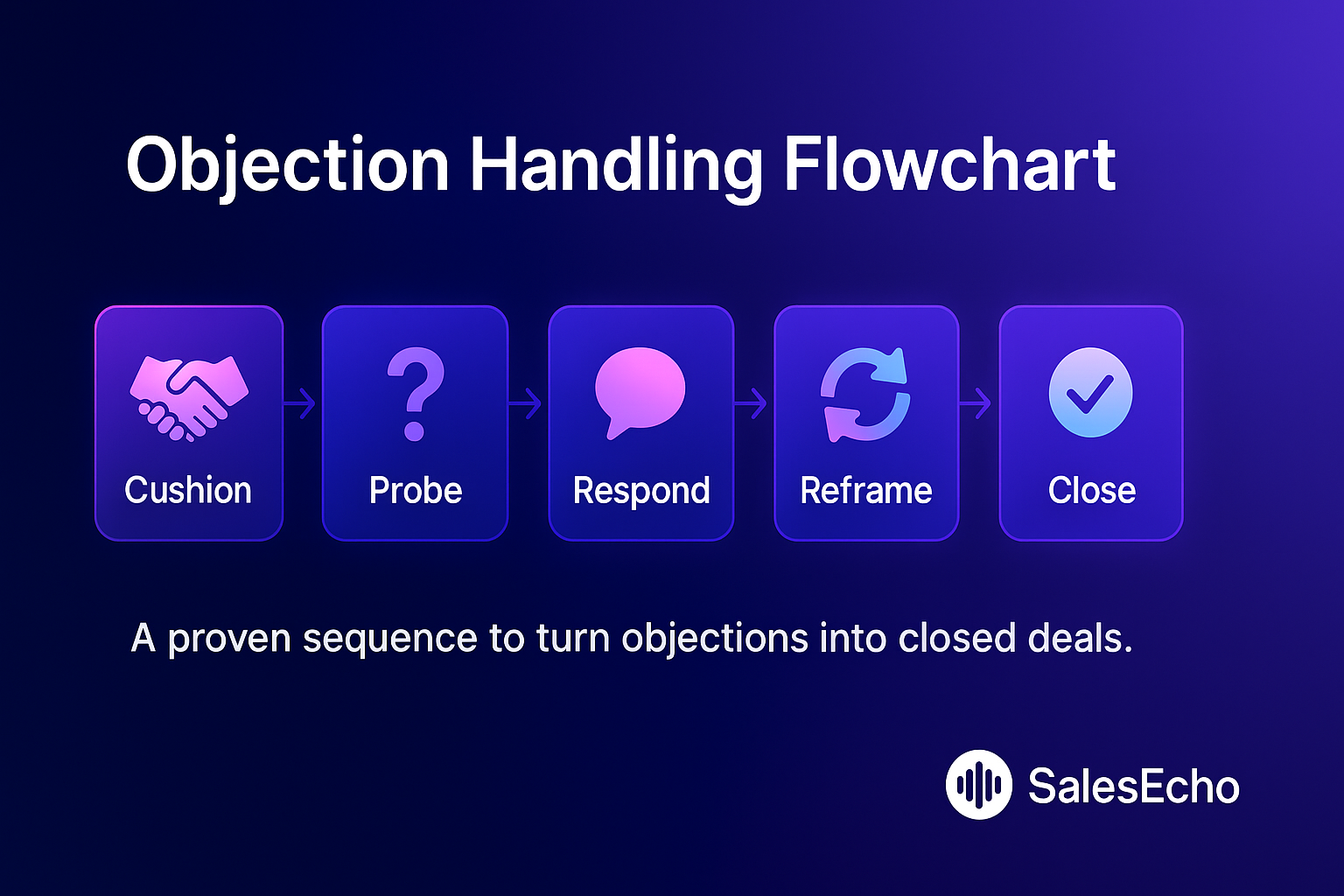
Cushion → Probe → Respond
Instead of jumping straight to an answer, cushion the objection (acknowledge it), probe for the real issue, then respond with value.
Example: “I understand price is a concern. Can you tell me how you’re evaluating ROI right now?”Empathy First
Buyers want to feel heard before they want to be sold. Start by validating their concern: “I completely understand — budget pressure is real right now.” This lowers defenses and opens space for problem-solving.ROI Framing
Translate cost into measurable business outcomes. Reps who show how $1 spent leads to $3 in return win more deals than those who argue price.
Example: “On average, clients see a 4x return in the first six months.”Trial Close Questions
Use soft closing questions to test commitment and uncover hidden objections.
Example: “If budget weren’t an issue, would this be the right solution for your team?” This isolates the true barrier and prevents wasted back-and-forth.
If you want help putting these objection handling techniques into practice, consider using an AI sales assistant to coach you in real time.
Real-World Examples of Overcoming Budget Objections
Sometimes the best way to learn how to handle objections in sales: examples is to see them play out. Below are a few examples of sales objections and the responses that turn budget pushback into opportunity.
Objection: “$8,000 is too much.”
Response: “Totally fair reaction. Most of our clients recover that investment with just two closed deals — after that, everything is profit. The real cost is the deals lost without this system in place.”
Objection: “We don’t have budget right now.”
Response: “I understand. If budget weren’t an issue, would this be the right solution for your team? If yes, let’s discuss a phased rollout so you see ROI sooner while keeping upfront costs manageable.”
Objection: “We’re cutting costs this quarter.”
Response: “That makes sense. Many of our customers came to us during budget cuts because we helped them lower operating expenses by 20%. This isn’t another cost — it’s a way to reduce the ones you already have.”
Objection: “Can you do it cheaper?”
Response: “Our pricing reflects the results we deliver. That said, we do offer flexible packages so you can start small and expand later. The ROI is the same — it’s just structured to match your cash flow.”
👉 These side-by-side sales objections and answers show that handling budget pushback isn’t about lowering price. It’s about reframing value, uncovering true priorities, and giving buyers the confidence to invest.
How to Handle Objections in Sales Calls Step-by-Step
Budget pushback can feel intimidating, but the truth is every rep can master the process of handling objections in sales. Follow this simple 5-step roadmap whenever you face resistance:
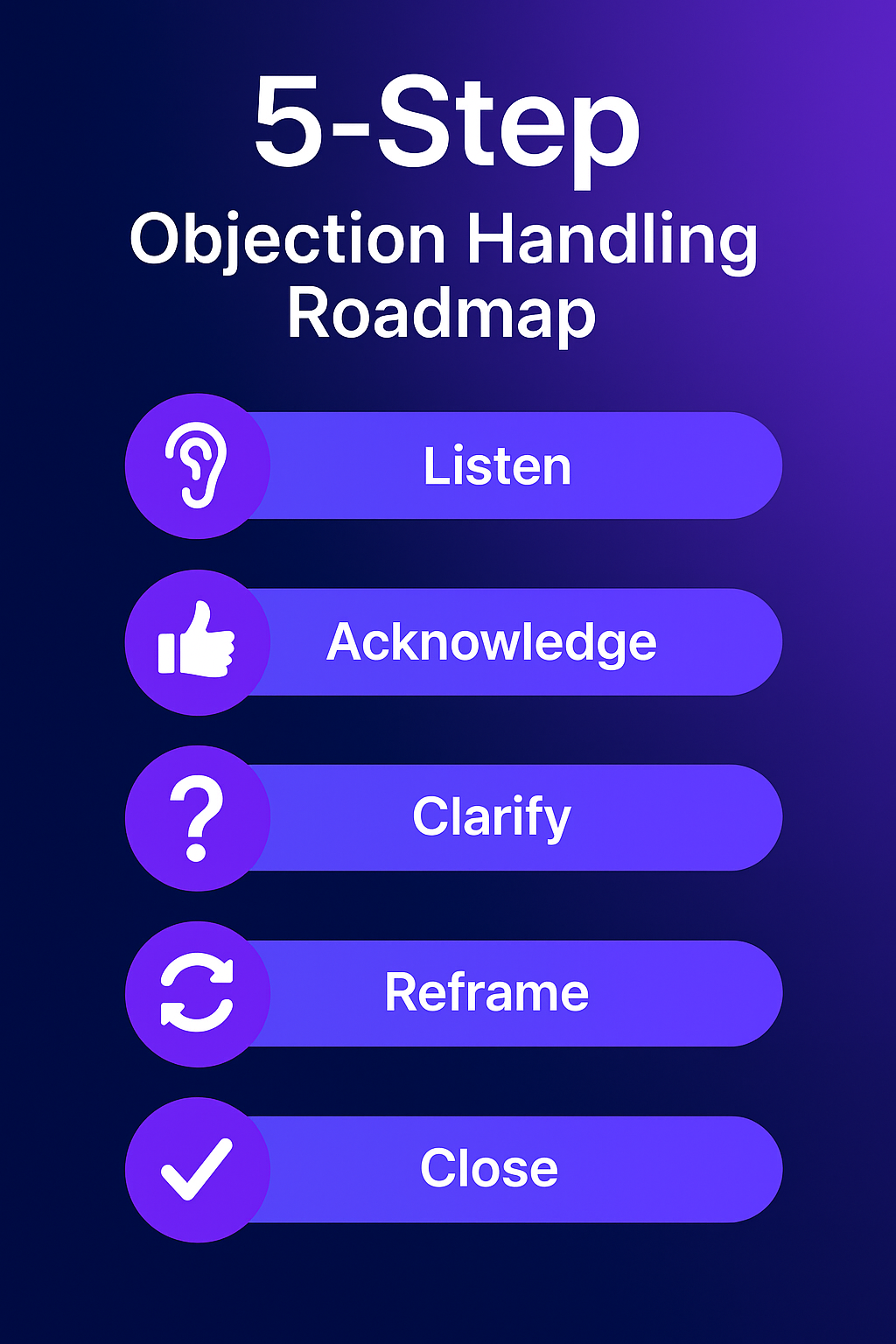
Listen without interrupting
Let the prospect finish. Cutting them off shows defensiveness. Silence builds trust and often reveals more context.Acknowledge the concern
Validate what they’ve said so they feel heard:
“I understand why budget is top of mind — a lot of teams are saying the same thing right now.”Ask clarifying questions
Dig deeper to uncover the real issue.
“If budget weren’t a factor, would this solution solve your team’s challenge?”Reframe with value
Show outcomes, not costs. Compare the price to ROI, efficiency gains, or the cost of doing nothing.
“Two lost deals this quarter would cost more than the annual subscription.”Close with confidence
Summarize their needs, reinforce the value, and ask for next steps.
“Given what we’ve discussed, does it make sense to move forward with the starter package today?”
👉 Mastering this process helps you not just with overcoming objections, but with building trust and closing deals faster. When asked “how do you overcome sales objections?”, this five-step framework is your go-to answer.
Bonus: Car Sales Objections and Responses Template
Car dealerships deal with some of the toughest price-sensitive buyers. Having a ready-to-use car sales objections and responses template helps reps stay confident and consistent on the lot or in the showroom.
Objection: “This car is too expensive.”
Response: “I hear you — price is important. Many of our customers felt the same until they saw how this model’s fuel savings and warranty actually made it cheaper to own over time.”
Objection: “I need to talk to my spouse before making a decision.”
Response: “Of course, that makes sense. Would it help if I put together a side-by-side comparison you can take home so the two of you can review the benefits together?”
Objection: “We’re just looking today.”
Response: “That’s great — no pressure. While you’re here, would it be helpful if I showed you the features buyers in your price range love most? That way you’ll know exactly what to compare when you’re ready.”
Objection: “Another dealership offered me a lower price.”
Response: “I understand. Sometimes lower upfront prices mean hidden fees or missing features. Let’s go over the full breakdown so you can compare total ownership costs with complete clarity.”
👉 This car sales objections and responses template gives auto sales reps a framework they can adapt on the spot — showing empathy, delivering value, and building trust instead of pushing harder.
Top Sales Objections and How to Answer Them
For fast lookups, here’s a table summarizing the top sales objections and the best strategies to address them. Use it as a cheat sheet during training or even as a quick prep guide before a call.
Objection | Response Strategy | Example Line |
|---|---|---|
Too expensive | ROI framing | “Two closed deals = full ROI.” |
No budget now | Future pacing | “Let’s plan for next quarter.” |
Need to check with finance | Authority alignment | “Let’s set up a quick call with your finance lead so we can review ROI together.” |
We’re cutting costs | Cost-reduction framing | “That’s exactly why clients choose us — we help reduce total spend by 20%.” |
Can you do it cheaper? | Value reinforcement | “Our pricing reflects the results we deliver, but we can explore phased packages to fit your cash flow.” |
Addressing the top sales objections is one of the fastest ways to boost close rates. For more strategies, check out our guide on how to improve sales call conversion.
Key Takeaways
Budget objections ≠ dead deals. They’re often signals to dig deeper, not reasons to give up.
Value > Price. Buyers rarely reject because of cost alone — it’s about whether they believe the solution is worth it.
Confidence + process + empathy = successful objection handling. When you listen, reframe, and respond with clarity, objections become opportunities to close with trust.
Mastering budget objections is just one part of becoming a top closer. Pair these skills with proven tactics from our blog on improving sales call conversion to maximize results.
Whether you use a playbook, a mentor, or an AI assistant like SalesEcho, the principle is the same: confidence, empathy, and value framing are what win over objections.
FAQ
Q1: What is the best way to handle sales objections about price?
The best way is to shift the conversation from cost to value. Instead of defending your price, highlight ROI, customer success stories, and the cost of doing nothing. This approach shows the buyer why the investment makes sense.
Q2: What are the most common objections in sales?
The most common objections in sales include:
Budget objections (“It’s too expensive”)
Timing objections (“We’re not ready right now”)
Need objections (“We don’t really need this”)
Trust/authority objections (“I’ll need to check with my manager”)
Q3: What are the top 5 objections and potential ways to handle them?
Too expensive → Reframe with ROI.
No budget now → Future pace to next quarter.
Need to check with finance → Align with decision-makers.
We’re cutting costs → Show how your product reduces overall spend.
Can you do it cheaper? → Reinforce value and offer flexible packaging.
Q4: How do you overcome sales objections without discounts?
Use value-based selling. Show outcomes, use case studies, and position your solution as a way to save or make money. Discounts often weaken your position — proving value strengthens it.
Q5: What are good sales objections questions and answers for training reps?
Q: “We already have a solution in place.”
A: “That makes sense. What do you like about it — and where does it fall short?”
Q: “This is out of budget.”
A: “If budget weren’t a factor, would this be the right solution? Let’s explore phased options.”
These real-world sales objections questions and answers help reps practice objection handling in a safe environment.
Q6: Why are budget objections the hardest to overcome in sales?
Because they sound final. Money is tangible, so buyers use it as a shield. But budget objections are often smokescreens for lack of trust, urgency, or value clarity. Skilled reps uncover the true barrier and reframe the conversation.
Q7: How do you prepare for customer objections before a sales call?
Research the buyer’s industry and typical pain points.
Anticipate the customer objections most likely to come up.
Prepare ROI calculators, case studies, and rebuttal lines.
Practice objection handling roleplays with your team.
Preparation ensures you respond with confidence instead of scrambling under pressure.
Want to get comfortable with these rebuttals before a real call? Try AI sales call practice to roleplay budget objections against an AI buyer and get instant feedback.