
How to Improve Sales Call Conversion: Proven Strategies + AI Insights
 Rishabh Jain
TL;DR: Improve sales call conversions by listening more than you talk, personalizing each call, handling objections with empathy, giving a clear CTA, and using AI tools to track and coach performance.
Introduction: Why Sales Call Conversion is Harder Than It Looks
Did you know the average B2B sales call conversion rate hovers between 20–30%? That means for every 10 calls your team makes, 7–8 prospects either walk away, stall, or go silent. For sales leaders and reps alike, that’s not just a missed opportunity — it’s lost revenue, wasted pipeline effort, and a morale drain.
Why do so many calls fail to convert? The reasons are frustratingly familiar:
Objections that catch reps off guard (“It’s too expensive,” “We’re happy with our current vendor”).
Prospects disengaging mid-call because the conversation feels scripted or irrelevant.
Weak or nonexistent follow-up, leaving deals to fizzle out in inbox limbo.
The good news? Improving sales call conversion doesn’t require reinventing your entire process. With a combination of practical strategies and modern AI-powered tools like SalesEcho, reps can shift from reactive to proactive — handling objections in real time, balancing talk-listen ratios, and locking in next steps before the call ends.
In this guide, we’ll break down the biggest blockers to conversion, share proven techniques to overcome them, and show how AI can supercharge every stage of the sales call.
Why Sales Call Conversion Matters More Than Ever
At its core, sales call conversion is about moving a conversation forward. It doesn’t always mean closing a deal on the spot — a successful conversion can also mean:
Booking the next meeting or demo
Securing a qualified opportunity that advances in your pipeline
Gaining commitment to a clear next step, whether it’s a trial, pricing discussion, or proposal
In other words, sales call success isn’t just about the “yes” — it’s about progress.
Industry Benchmarks
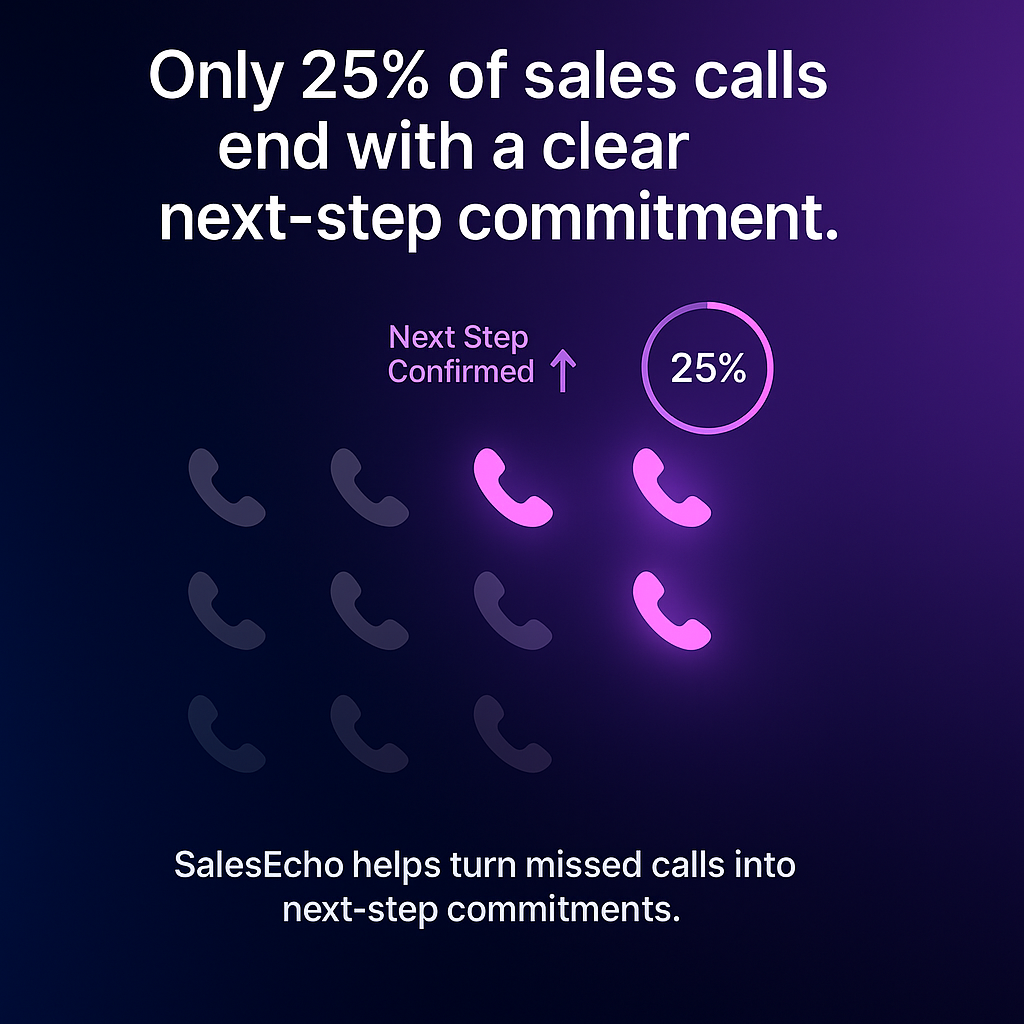
On average, B2B sales call conversion rates sit between 20–30%. That means 7 or 8 out of every 10 calls don’t advance to the next stage. High-performing teams may push beyond that, but even world-class reps know conversions are hard-earned.
Key sales performance metrics to track include:
Call-to-close ratio (how many calls lead to a signed deal)
Next-step commitment rate (calls that successfully secure another meeting or trial)
Objection resolution rate (percentage of objections handled effectively)
Why It Matters in 2026
In today’s competitive market, prospects are more informed, harder to engage, and often juggling multiple vendor conversations. That means every call counts more than ever:
Lower conversion rates = wasted pipeline potential
Stronger conversions = shorter sales cycles and higher ROI on lead generation
Common Reasons Sales Calls Fail
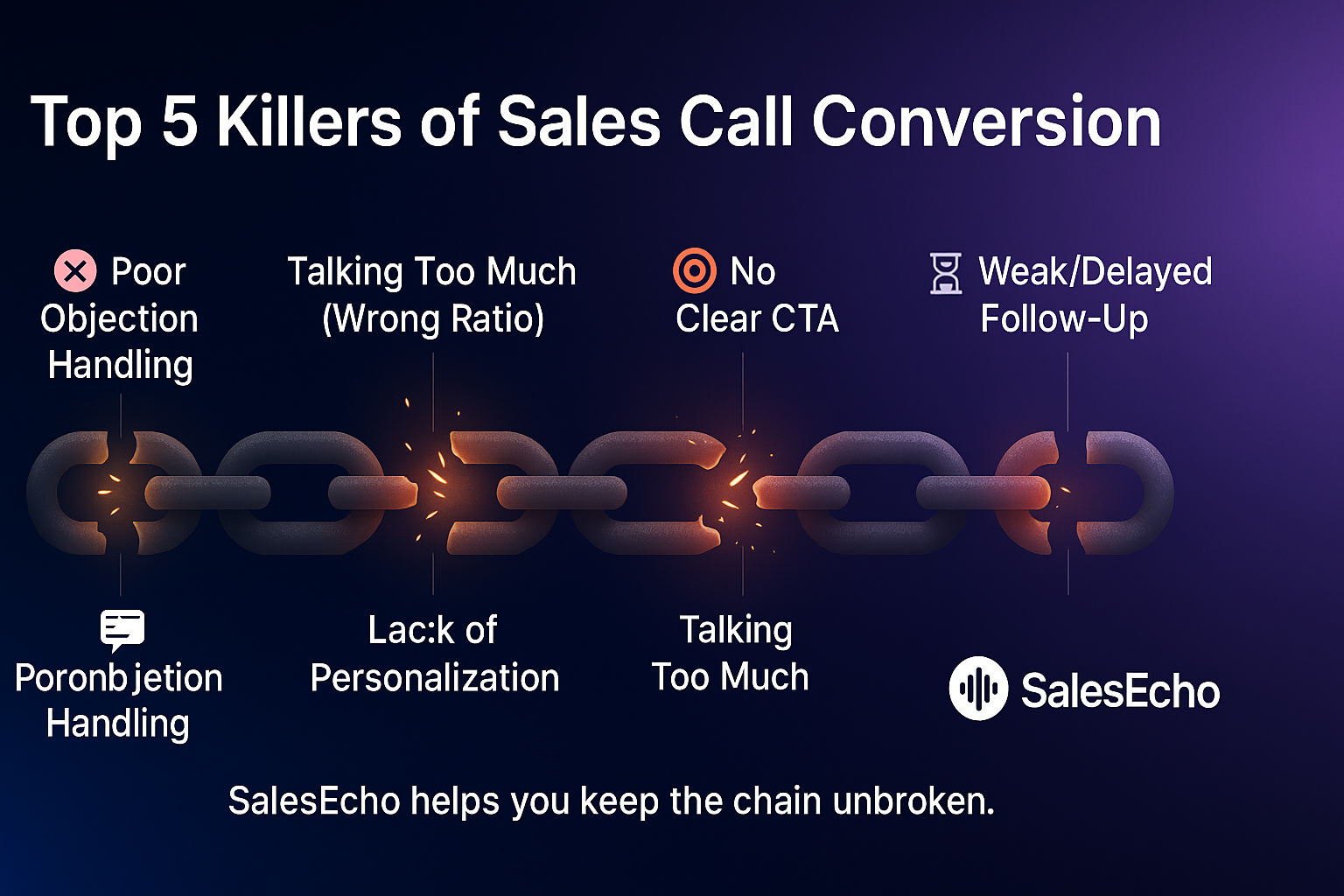
If sales calls are the make-or-break moment in the buyer journey, why do so many end without a conversion? The truth is, most failures come down to a few consistent — and avoidable — mistakes.
1. Poor Objection Handling
When a prospect pushes back with “It’s too expensive” or “We already use another tool”, many reps stumble. Without a clear framework (or real-time support), objections derail momentum and erode trust.
2. Wrong Talk-Listen Ratio
High-performing reps know the ideal talk-to-listen ratio is around 40:60. But too often, salespeople dominate the conversation, leaving prospects disengaged and unheard. This imbalance kills rapport and reduces call-to-close ratio.
3. Lack of Personalization
Generic scripts and one-size-fits-all pitches feel robotic. Buyers expect reps to know their industry, pain points, and goals. Without personalization, calls feel transactional instead of consultative.
4. No Clear Call-to-Action (CTA)
Even when conversations go well, many calls end without a concrete next step — no demo scheduled, no follow-up booked, no defined commitment. Without a CTA, momentum dies in the inbox.
5. Weak Follow-Up (The Silent Killer)
Not listed explicitly above, but equally damaging: reps delay or forget timely follow-ups. A great call without next-step execution often ends up in pipeline purgatory.
10 Proven Strategies to Improve Sales Call Conversion
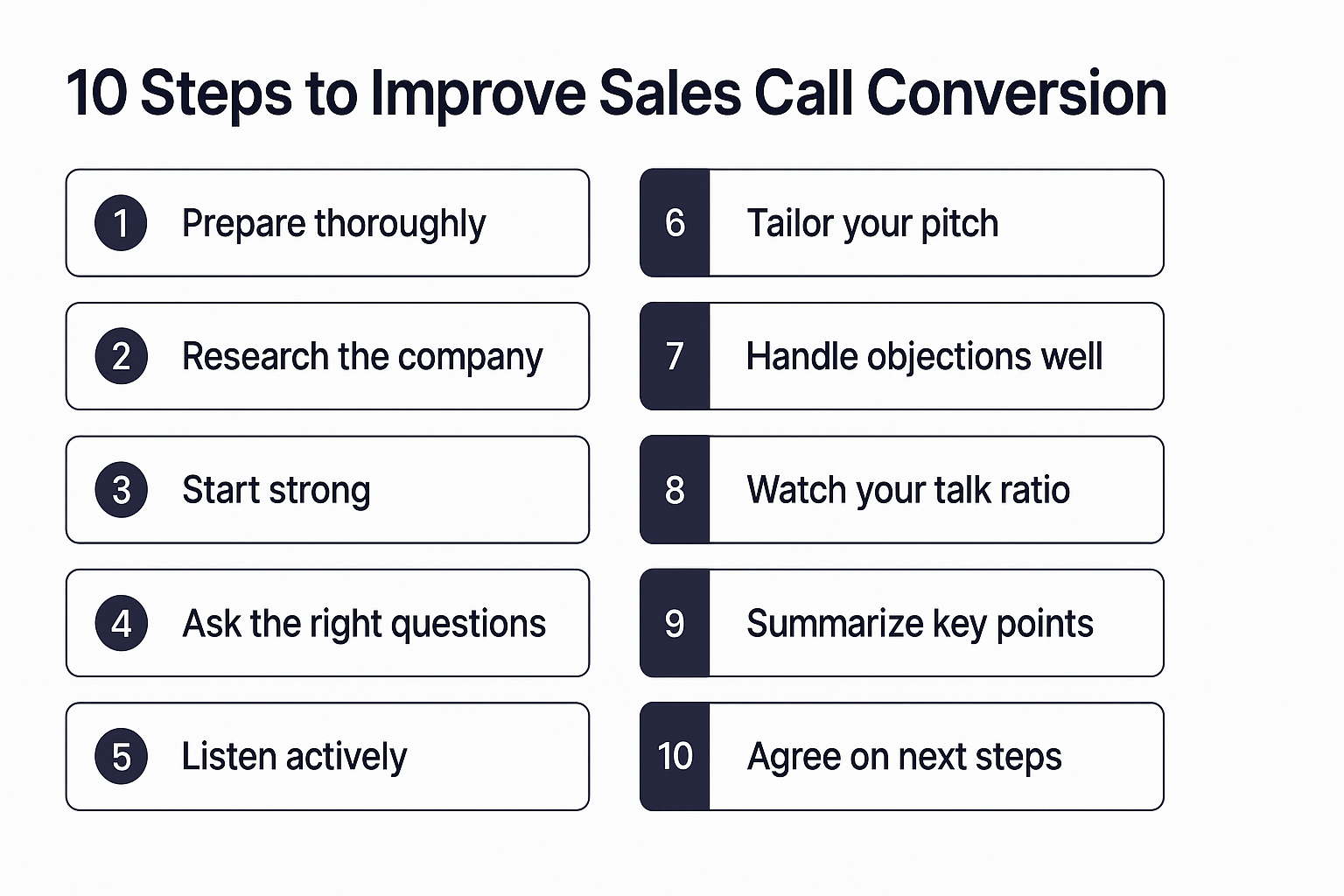
Improving your conversion rate isn’t about luck — it’s about applying proven techniques consistently. Here are 10 strategies that top-performing reps use (and that you can implement right away).
1. Master Objection Handling in Real Time
Objections are inevitable — but they don’t have to end your deal. Winning reps respond with empathy, curiosity, and clarity instead of defensiveness.
❌ Phrases that lose:
“That’s just our price.”
“We don’t do discounts.”
✅ Phrases that win:
“I hear you — can I share how other clients in your position overcame this concern?”
“Let’s unpack that together — what’s the real priority for your team right now?”
👉 Pro Tip: Use AI assistants like SalesEcho to instantly surface brand-safe, context-specific responses so your momentum never stalls.
2. Balance the Talk-Listen Ratio
One of the fastest ways to kill a deal is talking too much. Research shows the sweet spot is about 40% talking, 60% listening.
Pull-Quote: “Great reps listen twice as much as they talk.”
SalesEcho helps track this ratio in real time, nudging you if you’re overspeaking.
3. Personalize with Pre-Call Research
Prospects tune out generic pitches. Before dialing in, check their LinkedIn profile, company news, and CRM notes. Personalization shows respect for their time.
SalesEcho integrations can pull in context automatically, so you’re prepared without juggling tabs.
4. Use Real-Time Coaching Tools
Traditional call coaching happens after the call, when it’s too late. Instead, give reps in-the-moment support.
SalesEcho can whisper prompts during Zoom, Meet, or Teams calls — helping reps stay sharp while the conversation unfolds.
5. Leverage AI Sales Assistants
Generic scripts are rigid and easy for prospects to spot. AI-driven prompts adapt dynamically to buyer cues, creating natural conversations.
With SalesEcho, reps get personalized, live suggestions that feel authentic — not scripted.
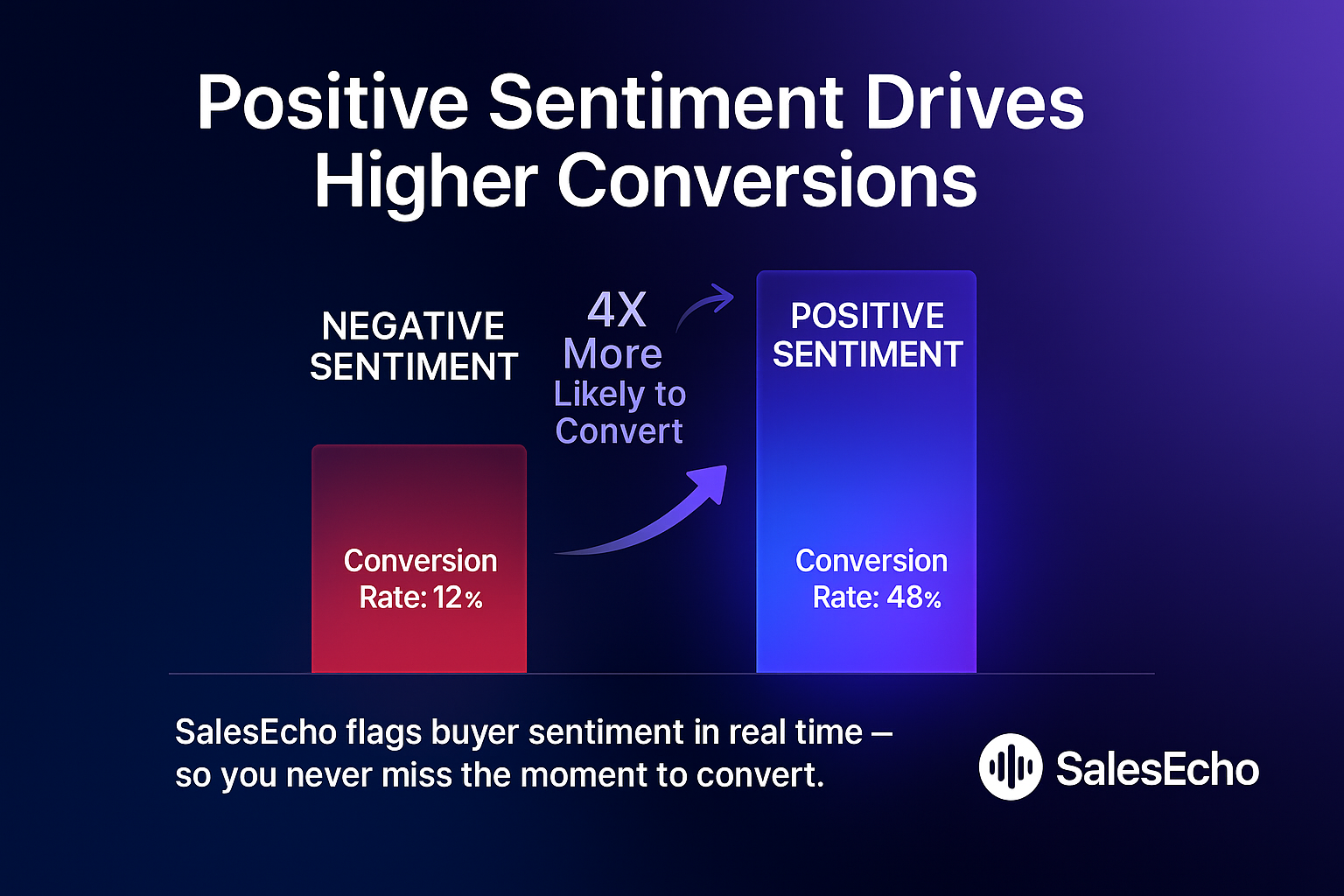
6. Optimize Sentiment & Emotional Cues
Conversion isn’t just logic; it’s emotion. If a buyer’s tone signals hesitation, reps need to pivot.
SalesEcho detects subtle sentiment shifts, highlighting when to slow down, empathize, or double down on value.
7. Keep Calls Action-Oriented with Live Prompts
Every call should build toward progress, whether that’s scheduling a demo or securing a small commitment.
AI-driven prompts remind reps to steer toward clear next steps without sounding pushy.
8. Improve Call Structure (Opening → Discovery → Value → CTA)
Unstructured calls feel scattered and fail to build momentum. Follow a proven flow:
Opening – Build rapport.
Discovery – Ask thoughtful questions.
Value – Map solutions to pain points.
CTA – Lock in the next step.
9. Strengthen Post-Call Follow-Up
Even strong calls fizzle without clear follow-up. Summarize takeaways, confirm commitments, and send next steps within 24 hours.
SalesEcho’s post-call insights capture highlights and missed discovery areas so nothing slips through.
10. Continuous Coaching & Analytics
Improvement comes from data. Track talk ratio, objection handling, and win rates at scale. Managers can then tailor coaching based on actual call performance.
How AI Tools Like SalesEcho Boost Conversion Rates
Traditional sales coaching often happens after the call, when the opportunity is already lost. AI-powered tools like SalesEcho change the game by embedding intelligence directly into the live conversation.
Key Ways SalesEcho Elevates Conversion
Real-Time Objection Handling → AI suggests brand-safe responses as soon as objections arise.
Calendar Integration → Book demos, follow-ups, or contract reviews instantly without leaving the meeting.
Post-Call Analyzer → Automatic highlights, missed discovery questions, and suggested follow-ups turn every call into a coaching asset.
Related: Top AI Sales Assistants
Traditional Coaching vs. SalesEcho AI-Powered Coaching
Aspect | Traditional Call Coaching | SalesEcho AI-Powered Coaching |
|---|---|---|
Timing | After the call (retroactive) | During the call (real-time) |
Objection Handling | Rep improvises, feedback later | AI suggests responses instantly |
Talk-Listen Ratio | Reviewed post-call | Tracked live with nudges |
Next-Step Booking | Manual, after call | Book follow-ups mid-call with calendar integration |
Post-Call Insights | Manual notes, prone to gaps | Automated summaries, suggested actions |
Scalability | Limited to manager bandwidth | Every rep gets real-time coaching support |
Quick Wins for Reps to Try on Their Next Call
Sometimes, small tweaks make the biggest difference. Here are five micro-tactics you can apply immediately to boost your sales call success rate:
Mirror Prospect Language → Subtly reflect their tone and word choice to build rapport.
Confirm Needs → Paraphrase back what they said to show you’re listening and aligned.
Summarize Value Clearly → Reiterate your solution in one crisp sentence before moving forward.
Secure Micro-Commitments → Ask questions like “Does this sound like it would help solve your X problem?” to keep momentum.
End with a Clear CTA → Always lock in the next step (demo, proposal, follow-up meeting) before hanging up.
FAQs on Improving Sales Call Conversion
❓ What is a good sales call conversion rate?
A good B2B sales call conversion rate typically falls between 20–30%, though top-performing reps can achieve 40% or higher by focusing on objection handling, personalization, and clear CTAs.
❓ How do I convert more sales calls into deals?
To convert more calls, focus on:
Asking discovery questions and listening more (40:60 talk-listen ratio).
Handling objections with empathy and clarity.
Always ending with a firm next step (demo, proposal, follow-up).
Using tools like SalesEcho for real-time coaching and objection handling.
❓ Why do most sales calls fail?
Common reasons include:
Talking too much and not listening.
Generic pitches without personalization.
Poor or defensive objection handling.
No clear call-to-action at the end.
Weak or delayed follow-up.
❓ Can AI tools really help improve sales call conversions?
Yes. AI tools like SalesEcho provide:
Real-time prompts to handle objections.
Live coaching to balance talk-listen ratios.
Sentiment analysis to detect buyer hesitation.
Post-call insights that highlight missed opportunities.
❓ What’s the ideal talk-to-listen ratio in sales calls?
Research shows the best ratio is about 40% talking and 60% listening. Reps who let prospects speak more build trust and uncover pain points that drive higher conversions.
❓ How do I handle objections during a sales call?
Stay calm and listen fully.
Acknowledge the concern (“I hear you”).
Ask clarifying questions.
Provide a tailored response backed by value or customer proof.
❓ What are the best AI tools for sales call coaching?
The top tools include:
SalesEcho (real-time AI assistant with prompts, integrations, post-call insights).
Gong and Chorus (call recording + analytics).
Outreach and SalesLoft (sales engagement with coaching add-ons).
❓ How do I measure success after a sales call?
Track metrics like:
Call-to-close ratio.
Conversion to next step.
Objection resolution rate.
Talk-listen ratio.
Sentiment trends across calls.
Final Thoughts: Smarter Sales Calls, Higher Conversions
Improving your sales call conversion rate isn’t about adding more pressure on prospects — it’s about creating smarter, more human conversations. By handling objections with confidence, keeping the right talk-to-listen ratio, personalizing every interaction, and ending with clear next steps, reps can dramatically boost their call-to-close ratio.
The difference today is that reps don’t have to do it alone. With AI-powered tools like SalesEcho, sales teams get real-time coaching, objection prompts, and post-call insights that transform every conversation into a conversion opportunity. Instead of guessing what went wrong, you’ll know what to adjust — and instead of missing the next step, you’ll book it live on the call.
In a market where buyers have endless options, the reps who adapt in real time win. With the right mix of proven strategies and AI-driven support, you can turn more conversations into commitments — and more commitments into revenue.
👉 Ready to see how SalesEcho can help your team improve sales call conversions? Explore how real-time coaching and AI-powered insights can change the way you sell.
Want to sharpen these skills before your next call? Practice sales calls with AI roleplay and get scored on what you actually did, in real time.